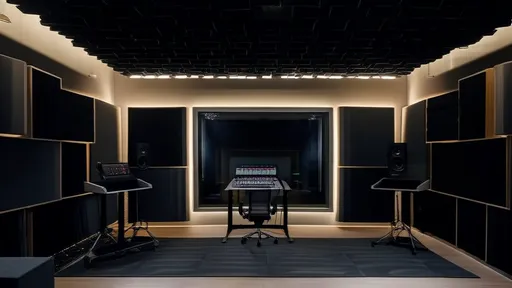
Transforming a spare room or basement into a home recording studio is an exciting endeavor for musicians, podcasters, and content creators. However, one of the most overlooked yet critical aspects of this transformation is acoustic treatment. Unlike soundproofing, which blocks sound from entering or leaving a space, acoustic treatment focuses on improving the sound quality within the room. Without proper treatment, even the most expensive microphones and audio interfaces can produce subpar recordings due to unwanted reflections, echoes, and frequency imbalances.
The first step in any home studio acoustic overhaul is understanding the behavior of sound in your space. Sound waves reflect off hard surfaces like walls, floors, and ceilings, creating standing waves and comb filtering that color your recordings. Low frequencies tend to build up in corners, while mid and high frequencies bounce around unpredictably. This is why an untreated room often sounds boomy, harsh, or unnaturally reverberant. The goal of acoustic treatment isn't to eliminate all reflections—that would create an unnatural dead space—but to control them for accurate monitoring and recording.
Bass traps are the foundation of effective acoustic treatment. These dense absorbers are placed in room corners where low frequencies accumulate. Unlike thin foam panels, proper bass traps extend deep into the corner and use dense mineral wool or fiberglass to absorb problematic frequencies below 300Hz. For serious home studios, floor-to-ceiling bass traps in all vertical corners make a dramatic difference in tightening up the low end and preventing muddy mixes that don't translate well to other playback systems.
Wall-mounted absorption panels tackle mid and high frequency reflections. The ideal placement is at the first reflection points—the spots on side walls, ceiling, and rear wall where sound from your monitors bounces directly to your listening position. Finding these points is simple: sit at your mixing position and have a friend move a mirror along the walls; when you can see your monitors in the mirror, that's a first reflection point. Two-inch thick panels with an air gap behind them work well for taming these reflections without over-deadening the space.
Diffusion becomes important in larger home studios where some liveliness is desirable. While absorption removes problematic energy, diffusers scatter sound waves to create a more natural acoustic environment without distinct echoes. Quadratic residue diffusers are particularly effective behind the listening position or on ceilings in rooms with high ceilings. However, diffusion should only be added after addressing the most problematic reflections with absorption, and never at the expense of proper bass trapping.
The floor and ceiling present unique challenges in home studio acoustics. Hard floors reflect high frequencies upward, while carpets tend to absorb only the very highest frequencies unevenly. A balanced approach might involve a small area rug under the monitoring position combined with proper ceiling treatment. Overhead clouds—suspended absorption panels—help control reflections between the monitors and desk surface, which often causes comb filtering that skews midrange perception during mixing.
Furniture placement significantly impacts room acoustics. The traditional approach of setting up along the short wall of a rectangular room helps minimize standing wave issues. Your listening position should ideally be about 38% of the room's length from the front wall, though this varies based on specific room dimensions. Avoid placing your desk flush against the wall, as this exacerbates bass buildup. Bookshelves filled with irregularly sized books can serve as surprisingly effective diffusers in home studio environments.
Measurement and analysis should guide your acoustic treatment decisions. Free software like Room EQ Wizard, combined with a measurement microphone, can reveal your room's frequency response and reverb time. This data shows exactly where your room needs attention—perhaps a 120Hz null or a 250Hz buildup—allowing you to target treatments effectively rather than guessing. Many home studios suffer from over-treatment in some frequency ranges while neglecting others, leading to an unbalanced sound.
DIY acoustic treatment offers significant cost savings over commercial products. Rigid fiberglass boards (like Owens Corning 703) or mineral wool (Rockwool) can be framed with simple wood constructions and wrapped in acoustically transparent fabric. These perform nearly as well as professional panels at a fraction of the cost. For bass traps, stacking multiple layers of dense insulation in corners creates effective low-frequency absorption. Always wear proper protective gear when working with insulation materials.
The human element remains crucial in any acoustic treatment scenario. After implementing treatments, spend time critically listening to professional mixes you know well in your space. Your ears will tell you if the room is too dead, if certain frequencies are exaggerated or lacking, or if stereo imaging feels unstable. Small adjustments—moving panels a few inches, adding or removing diffusion—can make meaningful differences. Remember that acoustic treatment is an ongoing process rather than a one-time installation.
Budget constraints shouldn't prevent basic acoustic improvement. Even simple measures like heavy curtains over windows, a thick rug on hard floors, and strategically placed bookshelves can noticeably improve a room's acoustics. As funds allow, these can be supplemented with proper bass traps and absorption panels. The key is addressing the most problematic issues first—typically low-frequency buildup in corners and early reflections at monitoring positions.
Seasoned engineers often note that they'd rather work with great acoustics and mediocre gear than vice versa. The reason becomes clear when you experience how proper treatment transforms your ability to make accurate mixing decisions and capture clean recordings. While the technical aspects of acoustic treatment may seem daunting initially, the payoff in recording quality and mixing confidence makes it one of the most valuable investments for any home studio enthusiast.
By /Aug 13, 2025

By /Aug 13, 2025

By /Aug 13, 2025

By /Aug 13, 2025

By /Aug 13, 2025
By /Aug 13, 2025
By /Aug 13, 2025
By /Aug 13, 2025
By /Aug 13, 2025
By /Aug 13, 2025

By /Aug 13, 2025
By /Aug 13, 2025
By /Aug 13, 2025

By /Aug 13, 2025

By /Aug 13, 2025

By /Aug 13, 2025
By /Aug 13, 2025

By /Aug 13, 2025

By /Aug 13, 2025

By /Aug 13, 2025
