Rhythm Therapy for Children with Autism

Aug 13, 2025 By

In recent years, the therapeutic potential of rhythm-based interventions for children with autism spectrum disorder (ASD) has gained increasing attention from researchers and clinicians alike. The unique responsiveness of many autistic children to musical stimuli has opened new avenues for addressing core challenges in communication, social interaction, and behavioral regulation. Unlike traditional therapeutic approaches that often rely heavily on verbal instruction, rhythm therapy taps into fundamental neural mechanisms that appear preserved—and sometimes enhanced—in individuals with autism.

The foundation of rhythm therapy lies in the brain's innate tendency to synchronize with external rhythmic patterns. Studies using advanced neuroimaging techniques have shown that musical rhythm activates widespread neural networks, including those involved in movement, emotion, and social cognition. For children with autism, who frequently struggle with timing and coordination in social exchanges, rhythm provides a structured temporal framework that can make interpersonal interactions more predictable and manageable.

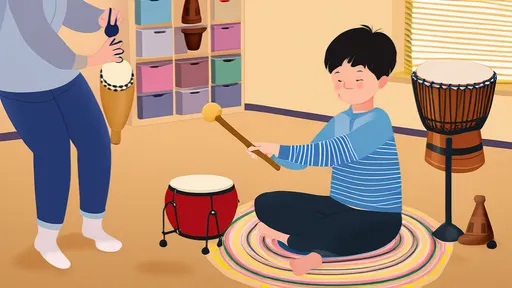
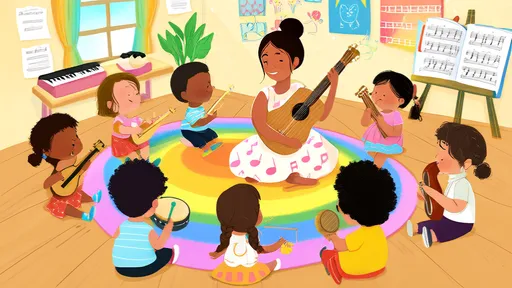
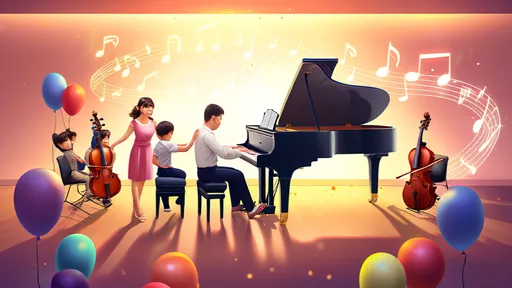
Clinical applications of rhythm therapy vary widely but typically involve drumming circles, rhythmic movement exercises, or the use of metronomes to structure activities. One particularly promising approach combines rhythm with imitation games, where therapist and child take turns leading and following rhythmic patterns. This not only builds motor skills but also fosters the back-and-forth dynamic essential for conversation. The physicality of drumming or clapping often proves more engaging for autistic children than face-to-face verbal interaction, lowering social anxiety while building connection.

What makes rhythm therapy especially valuable is its ability to bypass some of the neurological differences that make traditional social skills training challenging for autistic individuals. The repetitive, predictable nature of rhythmic patterns aligns well with the cognitive style of many children on the spectrum. Rather than fighting against a child's need for repetition, rhythm therapy incorporates it productively—turning what might be stimming behaviors into communicative acts when channeled into drumming or dancing.

Research outcomes have documented improvements across multiple domains. A longitudinal study published in the Journal of Music Therapy followed participants through six months of weekly rhythm sessions, showing measurable gains in joint attention—the ability to share focus on an object or activity with another person. Teachers reported decreased classroom disruptions following rhythm therapy sessions, suggesting improved self-regulation. Perhaps most remarkably, some children began spontaneously applying rhythmic patterns to organize their speech, using tempo and cadence to overcome prosody challenges common in autism.

The sensory aspects of rhythm therapy deserve particular consideration. Many autistic children experience either hypersensitivity or hyposensitivity to auditory input. Skilled therapists carefully calibrate volume and timbre, often starting with deep, resonant tones that are generally better tolerated. The tactile vibration of handheld drums provides additional sensory input that can have a grounding effect for children prone to overwhelm. This multisensory approach distinguishes rhythm therapy from purely auditory music interventions.

Implementation in school settings has shown particular promise, with rhythm breaks serving as effective transitions between activities. Unlike traditional time-out strategies that isolate children, rhythm breaks actively engage the nervous system in self-regulation. Teachers trained in basic rhythm techniques report being able to prevent meltdowns by initiating call-and-response clapping patterns that redirect escalating energy. The portability of rhythm tools—from professional drums to simple shakers—makes this approach practical for diverse environments.

Parental involvement represents another critical component of successful rhythm therapy. When caregivers learn to incorporate rhythmic elements into daily routines—using consistent musical cues for transitions or turning chores into rhythm games—the benefits extend beyond therapy sessions. This home integration is especially important for generalizing skills to real-world contexts. Many parents discover that rhythm provides a non-confrontational way to connect with children who resist more direct forms of interaction.

Despite its promise, rhythm therapy is not a universal solution. Some children with auditory processing differences or severe sensory sensitivities may find certain rhythmic stimuli aversive. Qualified therapists emphasize the importance of individualization, carefully observing each child's responses to adjust tempo, volume, and instrumentation. The therapy's effectiveness also depends on the practitioner's skill in reading subtle cues and maintaining just the right level of challenge—too simple becomes boring, too complex causes frustration.

The neuroscience underlying rhythm therapy continues to evolve. Cutting-edge research examines how rhythmic entrainment—the synchronization of neural oscillations to external beats—might enhance connectivity between brain regions that typically show reduced coordination in autism. Preliminary EEG studies suggest that rhythm therapy could promote neural plasticity in key social brain networks. While much remains to be understood, these findings point to possible mechanisms for the behavioral improvements observed clinically.

Looking ahead, the integration of technology promises to expand rhythm therapy's possibilities. Motion-capture systems can provide real-time visual feedback of a child's movements in relation to rhythmic patterns, making abstract temporal concepts more concrete. Adaptive digital platforms may soon personalize rhythm exercises based on continuous assessment of the child's responses. However, experts caution against over-reliance on technology, stressing that the human connection facilitated by shared rhythm remains the therapy's core strength.

As awareness grows, training programs for rhythm therapy specialists are emerging to meet demand. These programs typically combine musical training with deep study of autism's sensory and cognitive profiles. Certification standards are being established to ensure quality as the field professionalizes. Simultaneously, researchers are developing more rigorous assessment tools to quantify rhythm therapy's effects beyond anecdotal reports—a crucial step for securing insurance coverage and institutional support.

The broader implications of rhythm therapy extend beyond clinical settings. Its principles challenge conventional notions about how to build social capacity in autistic individuals. Rather than focusing solely on teaching explicit social rules—an approach that often feels unnatural and exhausting for people with autism—rhythm therapy works through implicit, embodied pathways. This paradigm shift aligns with the neurodiversity perspective, recognizing that social connection can flourish in forms beyond standard neurotypical patterns.

For families navigating autism interventions, rhythm therapy offers a compelling alternative or complement to existing approaches. Its non-invasive nature, adaptability across functioning levels, and inherent enjoyment make it accessible even when other therapies prove challenging. As research continues to refine methodologies and demonstrate outcomes, rhythm-based interventions will likely assume an increasingly prominent role in comprehensive autism care plans—not as a magic cure, but as a powerful tool for unlocking potential through one of humanity's most fundamental languages: the language of rhythm.
Recommend Posts
Music

Behind-the-Scenes Stories of National Anthem Recordings

By /Aug 13, 2025

The recording of a national anthem is often shrouded in quiet significance, a moment where history, pride, and artistry converge. Behind the polished performances heard at stadiums and state events lie untold stories—of musicians, engineers, and even ordinary citizens who contributed to the creation of these powerful musical symbols. The process is rarely straightforward, and the journey from conception to final recording is filled with challenges, emotions, and sometimes, unexpected turns.
Music

Rhythm Therapy for Children with Autism

By /Aug 13, 2025

In recent years, the therapeutic potential of rhythm-based interventions for children with autism spectrum disorder (ASD) has gained increasing attention from researchers and clinicians alike. The unique responsiveness of many autistic children to musical stimuli has opened new avenues for addressing core challenges in communication, social interaction, and behavioral regulation. Unlike traditional therapeutic approaches that often rely heavily on verbal instruction, rhythm therapy taps into fundamental neural mechanisms that appear preserved—and sometimes enhanced—in individuals with autism.
Music

Senior Electronic Keyboard Social Class

By /Aug 13, 2025

In a quiet community center on the outskirts of the city, a group of silver-haired students gather every Thursday morning, their laughter mingling with the melodic tones of electronic keyboards. This is no ordinary music class—it’s a social experiment disguised as an electronic keyboard course for seniors, and it’s quietly revolutionizing the way older adults connect with technology and each other.
Music

Picture Book Music Interactive Class Design

By /Aug 13, 2025

In the ever-evolving landscape of early childhood education, a new wave of interactive learning experiences is capturing the imaginations of both educators and young learners. Picture book music interaction classes have emerged as a powerful tool for fostering creativity, emotional expression, and cognitive development in children. These innovative sessions blend the visual storytelling of picture books with the universal language of music, creating a multisensory learning environment that resonates deeply with young minds.
Music

Corporate Team Improvisational Drum Circle

By /Aug 13, 2025

The corporate world is constantly evolving, and with it, the methods of team building and employee engagement are undergoing a transformation. One such innovative approach that has gained traction in recent years is the concept of Corporate Team Drum Circles. This dynamic and interactive activity is not just about making music; it’s about fostering collaboration, enhancing communication, and breaking down hierarchical barriers within organizations. Unlike traditional team-building exercises, drum circles require no prior musical experience, making them accessible to everyone, regardless of their background or skill level.
Music

Dynamic Response Adjustment of Electronic Drum Pads

By /Aug 13, 2025

The world of electronic percussion has undergone a quiet revolution in recent years, with dynamic response adjustment emerging as the unsung hero of expressive drumming. While flashy sound libraries and connectivity features often steal the spotlight, it's the nuanced behavior of drum pads that truly separates professional-grade electronic kits from their toy-like counterparts. Manufacturers have finally begun prioritizing what players actually feel beneath their sticks rather than just what comes through the speakers.
Music

Outdoor Waterproof Speaker for Performances

By /Aug 13, 2025

The world of outdoor entertainment has undergone a significant transformation in recent years, with waterproof speakers emerging as a game-changer for live performances. Unlike traditional audio equipment that falters at the slightest hint of moisture, these rugged sound systems defy the elements, delivering crisp acoustics whether under a blazing sun or during an unexpected downpour. The marriage of durability and sound quality has redefined what audiences expect from open-air concerts, festivals, and even backyard gatherings.
Music

Live Sound Card and Microphone Preamp Matching

By /Aug 13, 2025

In the world of live streaming, audio quality can make or break a content creator's success. While cameras and lighting often steal the spotlight, the unsung heroes of any professional stream are the audio interface (sound card) and microphone preamp (preamp) working behind the scenes. These two components form the backbone of crystal-clear vocal delivery, allowing streamers to connect with their audience through pristine sound reproduction.
Music

Wireless In-Ear Monitor Stability Test

By /Aug 13, 2025

The world of wireless audio has undergone a seismic shift in recent years, with true wireless earbuds becoming the dominant form factor for personal listening. As consumers increasingly cut the cord, manufacturers face mounting pressure to deliver not just superior sound quality, but rock-solid wireless stability - particularly for professional users who can't afford dropouts during critical performances or recordings.
Music

Sub-$1000 Monitoring Headphones Comparison Review

By /Aug 13, 2025

For audio professionals and enthusiasts seeking accurate sound reproduction without breaking the bank, the sub-$1000 studio headphone market offers a surprising range of options. These monitoring tools bridge the gap between consumer-grade headphones and high-end reference gear, delivering the flat frequency response critical for mixing and mastering while remaining accessible to home studio owners.
Music

Subway Commute Noise-Canceling Playlist

By /Aug 13, 2025

The hum of subway cars, the screech of wheels against tracks, the murmur of crowded platforms—these are the sounds that define the daily commute for millions of urban dwellers. For many, the cacophony of the underground is an unavoidable part of city life. But what if there were a way to transform this auditory chaos into something more bearable, even pleasant? Enter the commuter subway noise-reducing playlist, a growing trend among city commuters seeking solace in their earbuds.
Music

Copyright Sampling and Evasion Strategies"

By /Aug 13, 2025

In the ever-evolving landscape of music production, sampling has become a cornerstone of creativity. However, navigating the legal intricacies of copyright compliance can feel like walking through a minefield. Producers, artists, and labels must balance artistic freedom with legal obligations to avoid costly lawsuits and reputational damage. The stakes are high, and understanding the nuances of copyright law is no longer optional—it’s a necessity.
Music

Home Studio Acoustics Renovation

By /Aug 13, 2025

Transforming a spare room or basement into a home recording studio is an exciting endeavor for musicians, podcasters, and content creators. However, one of the most overlooked yet critical aspects of this transformation is acoustic treatment. Unlike soundproofing, which blocks sound from entering or leaving a space, acoustic treatment focuses on improving the sound quality within the room. Without proper treatment, even the most expensive microphones and audio interfaces can produce subpar recordings due to unwanted reflections, echoes, and frequency imbalances.
Music

A Survival Guide for Small Livehouses

By /Aug 13, 2025

The world of small live music venues is both exhilarating and unforgiving. These intimate spaces, often referred to as Livehouses, serve as the lifeblood of local music scenes, nurturing emerging artists and fostering tight-knit communities. Yet, keeping the doors open requires more than just passion—it demands strategy, adaptability, and a deep understanding of the ecosystem.
Music

Analysis of Digital Album Revenue Sharing Ratios

By /Aug 13, 2025

The music industry has undergone a seismic shift in recent years, with digital albums becoming a dominant force in how consumers access and enjoy music. As streaming platforms and online stores continue to grow, the discussion around revenue sharing and distribution models for digital albums has taken center stage. Artists, record labels, and distributors are all vying for a fair piece of the pie, but the question remains: what constitutes a fair split?
Music

Golden Rules for Musicians on Douyin Operation

By /Aug 13, 2025

The digital age has revolutionized how musicians connect with audiences, and nowhere is this more evident than on Douyin, China's explosive short-video platform. For artists navigating this vibrant space, understanding the platform's unique ecosystem isn't just helpful—it's career-defining. What separates viral musical sensations from overlooked talents often boils down to mastering Douyin's unwritten playbook.
Music

Community Plaza Sound System Upgrade Guide

By /Aug 13, 2025

The familiar hum of community squares is undergoing a quiet revolution. Across urban centers and suburban gathering spots, municipal planners and acoustic engineers are collaborating to transform these public spaces through sophisticated soundscape design. What was once an afterthought in public space planning has emerged as a crucial element in creating vibrant, welcoming community hubs.
Music

Annual Company Party Music Program Arrangement

By /Aug 13, 2025

The annual company gala is more than just a celebration of another year’s achievements—it’s a carefully orchestrated event that reflects the culture, energy, and unity of the organization. Among the many elements that contribute to its success, the musical program stands out as a cornerstone of the evening. A well-planned lineup of performances can elevate the atmosphere, engage employees, and leave a lasting impression. Crafting the perfect musical sequence requires a blend of creativity, technical expertise, and an understanding of the audience’s preferences.
Music

Interactive Design for Family Concerts

By /Aug 13, 2025

The concept of interactive design for parent-child concerts has been gaining remarkable traction in recent years. Unlike traditional performances where children passively listen to music, these innovative events create immersive experiences that engage both young audiences and their parents. The shift reflects a broader cultural movement toward participatory arts education, where families collectively explore musical concepts through play, movement, and creative expression.
Music

Folk Music Night Event Plan at the Bookstore

By /Aug 13, 2025

The dim glow of string lights casts a warm hue across the wooden bookshelves as the scent of aged paper mingles with freshly brewed coffee. This is the scene at Whispering Pages Bookstore, where every third Friday of the month, the written word dances to the rhythm of guitar strings during their now-iconic Folk Night. What began as an experimental evening of poetry and acoustic covers has blossomed into a cultural phenomenon, drawing crowds that spill onto the sidewalk of this unassuming corner in Brooklyn's arts district.