In the ever-evolving landscape of early childhood education, a new wave of interactive learning experiences is capturing the imaginations of both educators and young learners. Picture book music interaction classes have emerged as a powerful tool for fostering creativity, emotional expression, and cognitive development in children. These innovative sessions blend the visual storytelling of picture books with the universal language of music, creating a multisensory learning environment that resonates deeply with young minds.
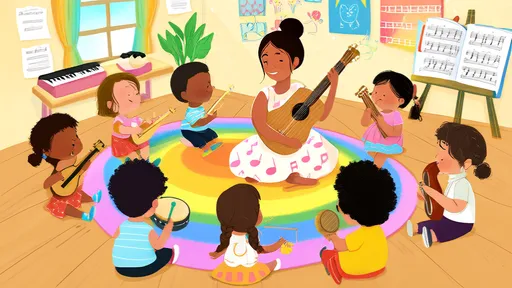
The concept might sound simple at first glance - combining books with music - but the pedagogical depth and emotional impact of these sessions reveal a sophisticated approach to holistic development. As children flip through vibrantly illustrated pages, they don't just hear stories; they become active participants in musical narratives. The rustle of turning pages might transform into percussion, character dialogues evolve into call-and-response songs, and emotional arcs find expression through melodic contours.
What sets these music interaction classes apart is their ability to meet children at their natural level of curiosity and energy. Unlike traditional storytime sessions that often demand stillness and quiet attention, these classes encourage movement, vocal expression, and spontaneous creativity. A page depicting a thunderstorm might prompt children to create booming sounds with their bodies, while a scene showing falling leaves could inspire gentle, swaying movements accompanied by soft humming.
The benefits of this approach extend far beyond musical proficiency or literacy skills. Educators report noticeable improvements in children's ability to focus, collaborate with peers, and express complex emotions. The combination of visual stimuli, physical movement, and auditory processing creates multiple neural pathways for learning and retention. Children who might struggle to sit through conventional reading sessions often flourish in this dynamic environment where every element of the story can be touched, heard, and felt.
Seasoned practitioners in the field emphasize the importance of careful curriculum design in these classes. The selection of picture books requires thoughtful consideration - illustrations must be rich in visual detail to inspire musical interpretation, while the narrative should offer natural opportunities for rhythm, repetition, and emotional variation. Popular choices often include books with animal characters (allowing for diverse vocal exploration), seasonal themes (providing a range of soundscapes), or journey narratives (lending themselves to musical progression and development).
Music educators specializing in early childhood development have observed fascinating patterns in how children engage with these classes. Initially, many children mirror the facilitator's musical ideas, but as sessions progress, they begin to offer their own interpretations. A quiet child might discover confidence through drumming the rhythm of a character's footsteps, while an energetic participant could learn to channel their enthusiasm into carefully timed musical contributions that serve the collective storytelling experience.
The social dynamics of these sessions reveal another layer of benefit. As children create music together in response to the visual narrative, they practice essential skills like turn-taking, active listening, and nonverbal communication. The shared creative process builds a unique sense of community, where each child's musical contribution is valued as part of the whole. This aspect proves particularly valuable in inclusive classrooms, where children of varying abilities can participate at their own level while still feeling connected to the group experience.
Parents attending these sessions often remark on the carryover effects into home life. Children begin to spontaneously create musical accompaniments to their favorite books, deepening their engagement with literature. Many families report that these classes have transformed reading from a passive activity into an interactive, creative ritual. The musical elements serve as memory anchors, helping children recall story details and sequence events with greater accuracy.
As research continues to demonstrate the cognitive benefits of multimodal learning, picture book music interaction classes are gaining recognition as more than just entertainment. Schools and early childhood centers are beginning to incorporate these methods into their literacy programs, recognizing their potential to reach diverse learning styles. The approach aligns particularly well with current understandings of neurodevelopment, honoring the fact that young children learn best when they can engage their whole bodies and multiple senses in the learning process.
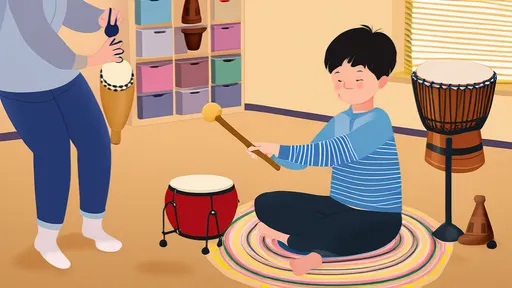
The future of these innovative classes looks bright, with new variations continually emerging. Some programs now incorporate simple instruments, allowing children to explore timbre and texture in their musical storytelling. Others experiment with technology, using apps that can translate children's drawings into musical motifs. However, at their core, these classes remain rooted in the fundamental power of human interaction - the shared joy of story and song between a facilitator and eager young learners.
For educators interested in exploring this approach, the journey begins with letting go of perfectionism and embracing playful experimentation. Successful sessions often arise from careful planning paired with the flexibility to follow children's creative leads. As one veteran teacher puts it, "The magic happens when we view ourselves not as instructors, but as fellow explorers in the boundless landscape where pictures and music meet."
In an age where screen time often dominates children's attention, picture book music interaction classes offer a refreshing return to tangible, sensory-rich learning. They remind us that some of the most powerful educational tools are those that have existed for generations - quality literature, expressive music, and the irreplaceable human connection that happens when these elements come together with intention and joy.
By /Aug 13, 2025
By /Aug 13, 2025
By /Aug 13, 2025
By /Aug 13, 2025

By /Aug 13, 2025

By /Aug 13, 2025

By /Aug 13, 2025
By /Aug 13, 2025

By /Aug 13, 2025

By /Aug 13, 2025

By /Aug 13, 2025

By /Aug 13, 2025

By /Aug 13, 2025

By /Aug 13, 2025

By /Aug 13, 2025

By /Aug 13, 2025

By /Aug 13, 2025

By /Aug 13, 2025
By /Aug 13, 2025
By /Aug 13, 2025
