The humble park bench, often overlooked as mere street furniture, has quietly evolved into a canvas for urban artistry and thoughtful design. Across global cities, these everyday objects are being reimagined as sculptural installations that serve both practical needs and artistic expression. This fusion of utility and beauty represents a growing movement in public space design—one that prioritizes human experience while enhancing civic pride.
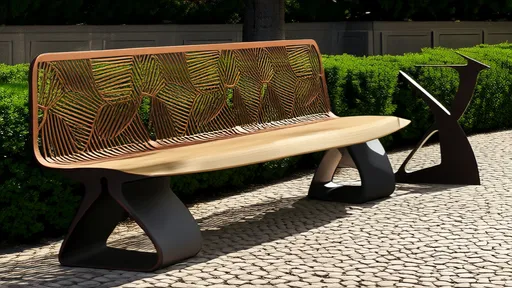
Modern bench designs increasingly challenge traditional perceptions of public seating. No longer confined to standard slatted wood on iron frames, today's park benches emerge as organic curves mimicking rolling landscapes, geometric abstractions that play with perspective, or even interactive pieces that respond to human presence. The materials too have diversified—from sustainably harvested tropical hardwoods to recycled plastics and even experimental composites that change color with temperature.
What makes this design evolution remarkable is how seamlessly aesthetics integrate with functionality. A bench might curve in ways that create natural social groupings, its undulating form simultaneously serving as an arresting visual element. Another might incorporate subtle backrest angles proven to reduce spinal pressure, wrapped in an artistic form that references local cultural motifs. The best designs don't simply place art beside function—they synthesize the two into inseparable wholes.
Cultural storytelling through seating has become particularly prominent. In Barcelona, benches incorporate mosaic patterns echoing Gaudi's architectural legacy. Tokyo's parks feature seating with subtle nods to origami folds. This trend moves beyond decoration—it embeds community identity into the physical landscape. When residents see their history and values reflected in public furniture, it fosters deeper connections to shared spaces.
The social dimension of bench design warrants particular attention. Well-conceived seating arrangements can influence how people interact in public spaces. Circular benches encourage conversation among strangers; solitary perches provide contemplative retreats; undulating designs create natural subdivisions for different groups. This social engineering through form demonstrates how thoughtful design can shape positive urban experiences without explicit rules or signage.
Material innovation plays a crucial role in this design renaissance. The traditional trade-off between durability and aesthetics is being overcome through technological advances. Powder-coated metals withstand weather while offering vibrant colors. New composite materials mimic the warmth of wood without maintenance requirements. Even concrete—often considered cold and uninviting—is being reimagined with integral pigments and textured finishes that invite touch.
Environmental considerations now fundamentally influence bench design. Many cities prioritize sustainable materials with low carbon footprints—recycled ocean plastics, FSC-certified woods, or locally sourced stone. Some designs incorporate rainwater channels to support adjacent plantings; others use reflective surfaces to reduce urban heat island effects. This ecological sensitivity demonstrates how even small design elements can contribute to larger sustainability goals.
The psychological impact of artistic seating should not be underestimated. Research in environmental psychology confirms that beautiful public spaces improve mental wellbeing. A creatively designed bench does more than provide rest—it offers surprise, delight, and a moment of visual pleasure in the daily routine. In healthcare settings especially, artistically designed seating has been shown to reduce patient stress and improve outcomes.
Accessibility concerns have driven important innovations in bench artistry. The most successful designs seamlessly integrate armrests for elderly visitors, subtle inclines for easier standing, and tactile elements for the visually impaired—all while maintaining artistic integrity. This inclusive approach demonstrates that practical accommodations need not compromise aesthetic vision when thoughtfully incorporated from the initial design stages.
Looking forward, the boundaries of bench design continue to expand. Some experimental models incorporate solar charging stations, others feature embedded sensors that monitor air quality. Interactive benches that respond to user presence with light or sound are being tested in several cities. While these technological integrations present maintenance challenges, they point to an exciting future where public seating becomes increasingly multifunctional.
The quiet revolution in park bench design reflects broader shifts in how we conceptualize public spaces. No longer just places to sit, these artistic installations serve as neighborhood landmarks, conversation starters, and subtle guides that shape how we experience urban environments. As cities worldwide embrace this design philosophy, the humble bench is being reimagined as both practical necessity and public art—proving that even the most utilitarian objects can inspire when creativity and purpose intersect.

By /Aug 11, 2025

By /Aug 11, 2025
By /Aug 11, 2025
By /Aug 11, 2025

By /Aug 11, 2025
By /Aug 11, 2025

By /Aug 11, 2025

By /Aug 11, 2025

By /Aug 11, 2025
By /Aug 11, 2025

By /Aug 11, 2025
By /Aug 11, 2025
By /Aug 11, 2025

By /Aug 11, 2025
By /Aug 11, 2025
By /Aug 11, 2025

By /Aug 11, 2025

By /Aug 11, 2025
By /Aug 11, 2025
By /Aug 11, 2025
