Screen Gradient Printing: The Gradual Transition of Dot Density Hierarchy

Aug 11, 2025 By

In the intricate world of screen printing, few techniques demand as much precision and artistic sensitivity as halftone gradient printing. This method, which creates the illusion of continuous tone through carefully calibrated dot patterns, represents both a technical challenge and an aesthetic triumph when executed properly. The journey from dense ink coverage to subtle translucence requires an intimate understanding of how dot density interacts with human perception.

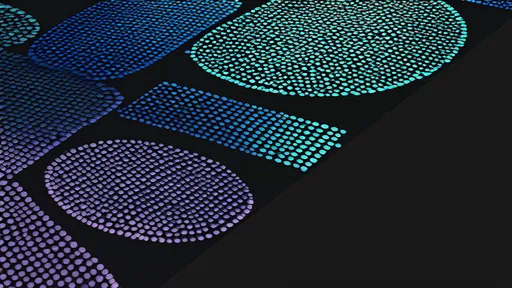
At its core, halftone gradient printing manipulates the fundamental building blocks of printed imagery. By varying the size and spacing of individual dots across a surface, printers can simulate the full spectrum of tonal values from rich blacks to whisper-light grays. The magic happens in the transition zones where dots gradually shrink or spread apart, creating optical blends that trick the eye into seeing smooth gradations where only discrete ink deposits exist.

The physics of ink transfer plays a crucial role in successful gradient execution. As mesh counts increase to accommodate finer dot patterns, the viscosity and surface tension of inks become critical factors. Printers working with gradient effects often modify standard ink formulations, adjusting rheological properties to ensure consistent deposition across the entire density range. Too thick an ink may fail to transfer properly in high-mesh areas, while overly fluid formulations can cause dot gain that destroys delicate highlight details.

Screen tension emerges as another silent partner in the gradient printing process. Unlike solid color printing where moderate tension suffices, gradient work demands drum-tight screens to maintain dot integrity during the squeegee stroke. The difference between a 20-newton and 25-newton screen might determine whether a 5% highlight area prints as intended or disappears entirely. Professional shops dedicate specific screens to gradient work, recognizing that the microscopic deflection of looser mesh can distort delicate dot patterns.

Art file preparation separates adequate gradient printing from exceptional results. Traditional AM (amplitude modulated) screening, where dot size varies while spacing remains constant, has given way to more sophisticated approaches in high-end applications. Hybrid screening techniques now combine AM and FM (frequency modulated) methods, using smaller dots in highlight areas while maintaining consistent sizes through midtones. This hybrid approach minimizes the visible "jump" that often occurs when dots become too small to hold on press.

The relationship between substrate and gradient quality cannot be overstated. Absorbent materials like cotton present different challenges compared to non-porous surfaces such as coated papers or plastics. On textiles, ink tends to spread laterally through capillary action, potentially enlarging dots beyond their digital dimensions. Savvy printers compensate for this by adjusting their dot gain curves during the separation process, essentially "lying" to the RIP software so the printed result matches the original artwork.

Lighting conditions during press checks reveal another layer of complexity in gradient printing. The angle and intensity of inspection lights can dramatically affect perceived dot density. Professional print shops maintain standardized viewing booths with 5000K balanced lighting to evaluate gradients consistently. What appears as a smooth transition under fluorescent lights might show visible banding when examined under daylight-spectrum LEDs, making environmental control essential for quality assurance.

Press mechanics introduce their own variables into the gradient equation. The snap-off distance between screen and substrate must be minimized for delicate halftones, yet excessive reduction can cause smearing. Squeegee durometer, angle, and pressure all require fine-tuning - harder blades at sharper angles generally produce cleaner dots but may require multiple passes to achieve sufficient ink deposition in shadow areas. Some printers adopt a "pass and pause" technique, allowing partial drying between applications to build density without sacrificing dot definition.

Environmental factors extend beyond lighting to include temperature and humidity control. Ink viscosity changes with ambient conditions, affecting how dots form during printing. Humidity fluctuations alter how quickly emulsion absorbs moisture during washout, potentially changing the stencil's ability to hold fine dots. Serious gradient printers maintain climate-controlled production areas, recognizing that what seems like minor atmospheric changes can manifest as visible defects in sensitive tonal transitions.

The human element remains irreplaceable in gradient printing, despite advances in automation. Experienced press operators develop an almost intuitive sense for adjusting parameters on the fly. They might modify print speed by fractions of a second per stroke or make microscopic off-contact adjustments between prints to compensate for dot gain variations. This tactile knowledge, accumulated through thousands of impressions, often makes the difference between technically correct output and truly exquisite gradient work.

Emerging technologies continue to push the boundaries of what's possible in gradient printing. High-resolution laser-engraved screens eliminate the variables of traditional emulsion coatings, producing near-perfect dot structures. Some innovators are experimenting with variable mesh screens that change count density across the printing area to match gradient requirements. Meanwhile, advanced RIP software now incorporates substrate-specific dot shaping algorithms that adjust dot profiles based on their position in the density range.

For designers incorporating gradient effects into their work, understanding these technical considerations leads to more successful collaborations with printers. Supplying vector-based gradient meshes rather than rasterized blends gives prepress technicians greater control over dot placement. Avoiding extreme 0-100% gradients in favor of more moderate 10-90% ranges often yields better printed results. Most importantly, maintaining open communication with the printing team ensures that artistic vision aligns with physical production capabilities.

The pursuit of perfect gradient printing mirrors broader trends in graphic arts - a constant balancing act between digital precision and analog execution. As the technology evolves, so too does the appreciation for craftsmen who can make dots dance across the tonal spectrum. In an age of instant digital gratification, the deliberate, layered approach of screen-printed gradients offers a tactile reminder of printing's enduring magic.
Recommend Posts
Arts

Reviving Old Wall Murals: Creative Repair of Historical Traces

By /Aug 11, 2025

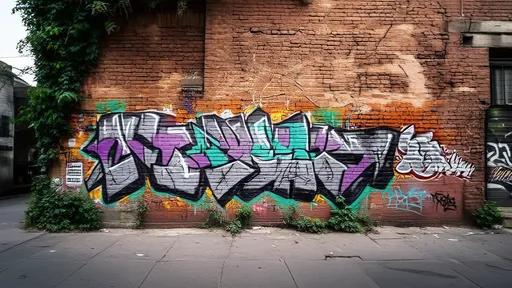
The old brick wall stood silently for decades, its weathered surface bearing witness to generations of urban transformation. What was once considered an eyesore in the bustling city center has now become a vibrant canvas where history and contemporary creativity engage in a fascinating dialogue. Across global cities, from Berlin's East Side Gallery to Melbourne's laneway masterpieces, communities are rediscovering the power of mural art as a tool for urban regeneration and cultural preservation.
Arts

Hospital Wayfinding System: Color Planning for Healing Environments"

By /Aug 11, 2025

Hospital environments are often associated with stress, anxiety, and uncertainty. For patients, visitors, and even staff, navigating complex healthcare facilities can be an overwhelming experience. This is where effective wayfinding systems play a crucial role in creating intuitive, calming spaces that promote healing rather than frustration. Among the various elements that contribute to successful hospital navigation, color stands out as one of the most powerful yet frequently underestimated tools in environmental design.
Arts

Artistic Park Benches: The Symbiosis of Function and Aesthetics in Design"

By /Aug 11, 2025

The humble park bench, often overlooked as mere street furniture, has quietly evolved into a canvas for urban artistry and thoughtful design. Across global cities, these everyday objects are being reimagined as sculptural installations that serve both practical needs and artistic expression. This fusion of utility and beauty represents a growing movement in public space design—one that prioritizes human experience while enhancing civic pride.
Arts

Subway Station Ceramic Murals: Narratives of Commuting Spaces

By /Aug 11, 2025

The hum of trains, the hurried footsteps of commuters, and the flickering lights of passing carriages—these are the familiar sights and sounds of subway stations worldwide. Yet, in many cities, these transit hubs have evolved beyond mere functional spaces. They have become canvases for cultural expression, where ceramic murals transform sterile corridors into vibrant storytelling platforms. These artworks do more than beautify; they embed local histories, myths, and identities into the daily rhythms of urban life.
Arts

Digital Print Authentication: Ensuring the Value of Limited Reproductions

By /Aug 11, 2025

The art market has always thrived on scarcity and authenticity. In the digital age, where replication is effortless and often uncontrollable, the concept of value faces new challenges. This is particularly true for digital prints, which, unlike traditional paintings or sculptures, can be reproduced indefinitely without degradation. The emergence of certified limited-edition digital prints has introduced a framework to preserve the exclusivity and monetary worth of digital artworks. By combining blockchain technology, artist verification, and strict edition controls, the art world is adapting to ensure that digital creations retain their collectible status.
Arts

Screen Gradient Printing: The Gradual Transition of Dot Density Hierarchy

By /Aug 11, 2025

In the intricate world of screen printing, few techniques demand as much precision and artistic sensitivity as halftone gradient printing. This method, which creates the illusion of continuous tone through carefully calibrated dot patterns, represents both a technical challenge and an aesthetic triumph when executed properly. The journey from dense ink coverage to subtle translucence requires an intimate understanding of how dot density interacts with human perception.
Arts

Fine Point Method of Copperplate Etching: The Rhythm of Gray Tones Created by the Rocking Knife"

By /Aug 11, 2025

The art world has long been fascinated by the intricate beauty of copperplate engraving, but few techniques capture the subtlety of tonal gradation quite like the mezzotint rocking method. This centuries-old approach to creating velvety gray tones through meticulously textured copper plates represents one of printmaking's most labor-intensive yet visually rewarding processes.
Arts

Ink Stone and Ink Wash Texture: The Random Beauty of Oil and Water Repulsion"

By /Aug 11, 2025

In the quiet corners of printmaking studios, an ancient alchemy unfolds—one where grease and water wage a delicate battle upon limestone slabs. Stone lithography, a 19th-century invention that revolutionized art reproduction, continues to captivate contemporary artists with its unpredictable textures. The technique relies on a fundamental antagonism: oil-based inks cling to drawn marks while repelling water-soaked blank areas. But within this scientific principle lies an ocean of artistic accidents—the granular blooms, feathery bleeds, and volcanic crackles that transform mechanical reproduction into a dance of chance.
Arts

Ethics of Documentary Photography: The Boundary Between Observation and Intervention

By /Aug 11, 2025

Documentary photography has long been a powerful medium for capturing raw, unfiltered moments of human experience. Yet, behind every compelling image lies a complex ethical dilemma: when should the photographer remain an impartial observer, and when does moral responsibility demand intervention? This tension between bearing witness and stepping into the frame defines the very soul of the genre.
Arts

Registration Control in Multi-color Woodcut Printing

By /Aug 11, 2025

Woodblock printing, an ancient art form with roots in East Asia, has evolved over centuries into a sophisticated technique capable of producing intricate multicolor designs. Among the various challenges faced by printmakers, achieving precise color registration in multicolor woodblock prints stands as one of the most demanding aspects of the craft. The process, known as kento in Japanese or dui ban in Chinese, requires meticulous attention to detail and a deep understanding of material behavior.
Arts

Macro Photography of Insects: The Structural Beauty of Compound Eyes

By /Aug 11, 2025

The world of macro photography unveils a hidden universe, one that often escapes the naked eye. Among its most mesmerizing subjects are the intricate compound eyes of insects, structures so complex and beautifully designed that they rival the most sophisticated human-made optical systems. These multifaceted organs, evolved over millions of years, are not just functional marvels but also stunning visual spectacles when captured through the lens of a skilled photographer.
Arts

Stage Photography Anticipation: Capturing the Climactic Moment"

By /Aug 11, 2025

Stage photography is a dance between patience and precision, where the click of a shutter must align perfectly with the fleeting magic of live performance. Unlike other forms of photography, it demands an almost prophetic ability to anticipate moments before they unfold. The difference between a good shot and an extraordinary one often hinges on the photographer’s understanding of rhythm, emotion, and the unspoken language of the stage.
Arts

Architectural Photography Perspective: The Correction Magic of Tilt-Shift Lenses"

By /Aug 11, 2025

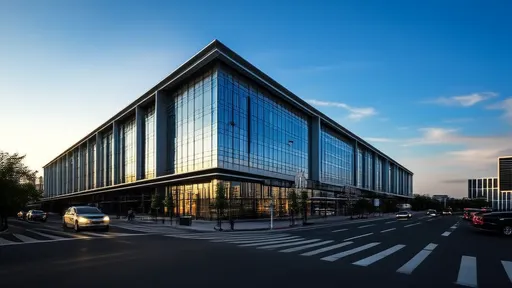
In the realm of architectural photography, where straight lines and geometric precision reign supreme, few tools are as revered—or as misunderstood—as the tilt-shift lens. Unlike conventional optics, these specialized lenses don’t just capture light; they bend reality itself, offering photographers an almost alchemical ability to correct distortion and manipulate perspective. The result? Buildings that stand tall and true, free from the converging verticals that plague standard wide-angle shots.
Arts

Classical Platinum Print: The Image Deposition of Precious Metals

By /Aug 11, 2025

The world of alternative photographic processes is a treasure trove for those who seek to explore the intersection of art, chemistry, and history. Among these processes, platinum and palladium printing stand out as some of the most exquisite and enduring methods of creating photographic images. Known for their unparalleled tonal range, depth, and permanence, these noble metal-based prints have captivated artists and collectors for over a century. The allure lies not just in the final image but in the meticulous, hands-on process that transforms light and chemistry into tangible art.
Arts

Community Fiber Art: The Healing Collective Practice of Weaving

By /Aug 11, 2025

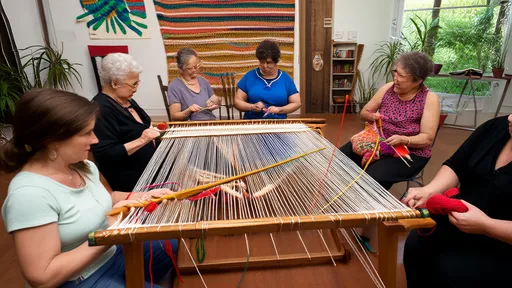
The hum of conversation mixes with the rhythmic click of knitting needles. A basket of vibrant yarn passes from hand to hand as newcomers are welcomed into the circle. This is no ordinary craft group—it's a growing movement where fiber arts become conduits for connection, storytelling, and unexpected therapeutic benefits. Across cities and small towns, community-based textile projects are redefining what it means to create together.
Arts

Campus Pottery Workshop: Safety Standards for Kiln Management

By /Aug 11, 2025

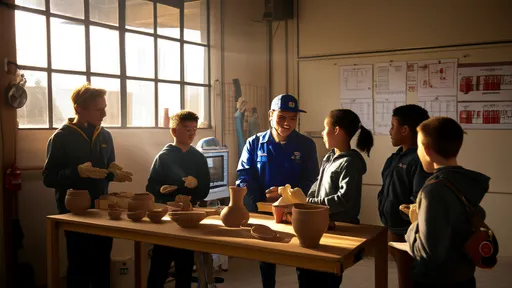
The hum of a kiln firing ceramics is a familiar sound in any thriving campus pottery studio. For students and faculty alike, the kiln represents the transformative heart of the creative process, where raw clay becomes enduring art. Yet this powerful equipment demands respect and rigorous safety measures. Proper kiln management isn't just about achieving perfect glaze results—it's about safeguarding lives and preserving studio spaces.
Arts

Museum Sketching Class: Refining the Lines of Classic Sculptures"

By /Aug 11, 2025

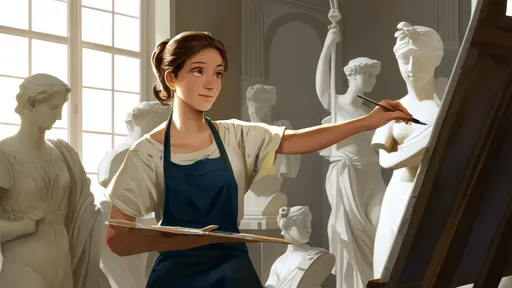
The hushed halls of museums have long been sanctuaries for artists seeking inspiration from the timeless beauty of classical sculptures. In recent years, a unique educational trend has emerged—structured sketching classes held within these very galleries. These sessions focus not on replicating the sculptures in their entirety, but on the sophisticated practice of extracting and refining their essential lines.
Arts

Silver Hair Calligraphy Class: Balancing Mind and Body through Brush and Ink Training"

By /Aug 11, 2025

The art of calligraphy has long been revered as a meditative practice, a bridge between the physical and the spiritual. For the elderly, it offers more than just aesthetic pleasure—it becomes a tool for cultivating balance, both in body and mind. The Silver Calligraphy Class: Physical and Mental Equilibrium Through Brush and Ink explores how this ancient practice is being adapted to meet the needs of older adults, fostering not only artistic expression but also holistic well-being.
Arts

Youth Sketch Advancement: Transition from Geometric Bodies to Portraits"

By /Aug 11, 2025

For decades, art educators have recognized the importance of building fundamental skills before tackling complex subjects. The journey from geometric shapes to human portraiture represents one of the most challenging yet rewarding transitions in artistic development. This progression forms the backbone of many classical art education systems, particularly when working with adolescent students whose cognitive and motor skills are undergoing significant changes.
Arts

Innovative Exhibition of Documents: The Dialogue of Manuscripts and Artifacts Across Time and Space"

By /Aug 11, 2025

In the ever-evolving landscape of cultural exhibitions, a groundbreaking approach has emerged, redefining how audiences engage with historical narratives. The Innovation in Exhibition Display: A Spatiotemporal Dialogue Between Manuscripts and Artifacts represents a paradigm shift in museology, where static displays give way to dynamic conversations across time and space. This revolutionary concept transcends traditional exhibition formats by creating immersive environments where handwritten documents and three-dimensional objects enter into meaningful discourse.